A plain-English comparison of all-wood plywood cabinet boxes and particleboard, covering durability, moisture resistance, weight, cost, and how to tell what you are actually buying.
All-wood cabinets use plywood boxes. Particleboard cabinets use compressed wood chips and resin. Plywood holds screws and hinges better, resists moisture far better, and lasts longer, which is why we build with plywood box construction. Particleboard costs less up front and can work in dry, low-use spots, but it swells and fails when it gets wet. For a kitchen you plan to keep, plywood is the stronger long-term choice.
Yes, we wrote this to show up when you search all-wood versus particleboard cabinets. We sell cabinets in Apple Valley, MN, so we have a stake in your decision. We also build with plywood boxes every day, so we will be straight with you about where each material makes sense and where it does not. Read this, then decide for yourself.
We carry many lines of cabinets, and we'll help you develop the perfect design for your lifestyle, your home's constraints and your budget.
Please visit our showroom in Apple Valley to start developing a real budget, see things in person and connect with our professional design team.
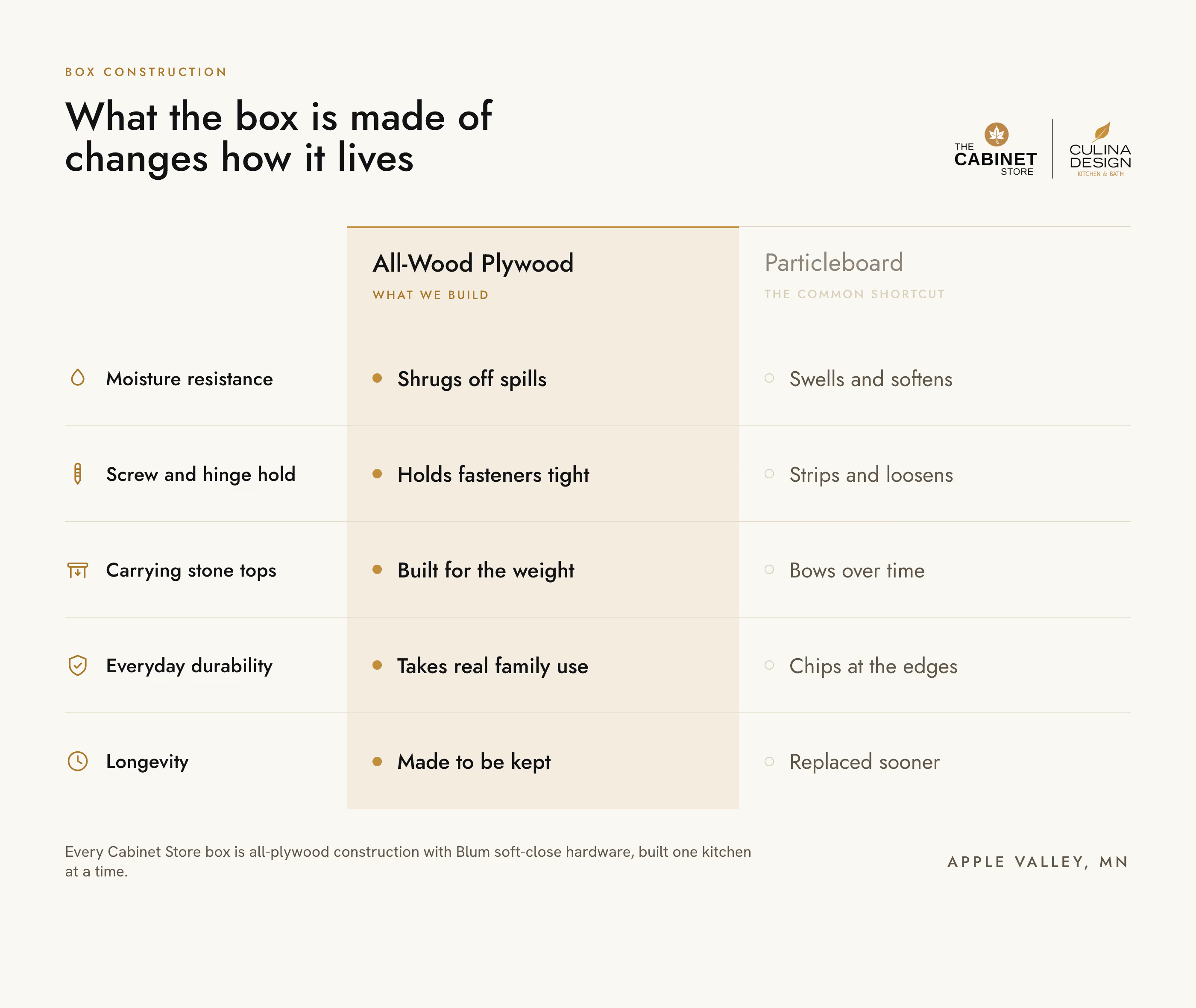
All-wood versus particleboard comes down to how the cabinet box is made. Plywood is thin layers of real wood glued in alternating grain directions, which makes it strong and stable. Particleboard is small wood chips and sawdust bound with resin under heat and pressure. According to Britannica, particleboard is denser and more uniform than solid wood but is chosen mainly when cost matters more than strength. The doors and face frames you see can look identical. The real difference lives in the box, which is the part that carries weight and takes abuse for decades.
Particleboard is manufactured from sawdust, chips, and shavings left over from other wood products, glued together and pressed into panels. It is usually covered with a thin veneer, laminate, or printed paper so the finished surface looks like wood or paint. Per Natural Resources Canada, the glue used in standard particleboard is often not water resistant, which is the root of most of its problems in a kitchen.
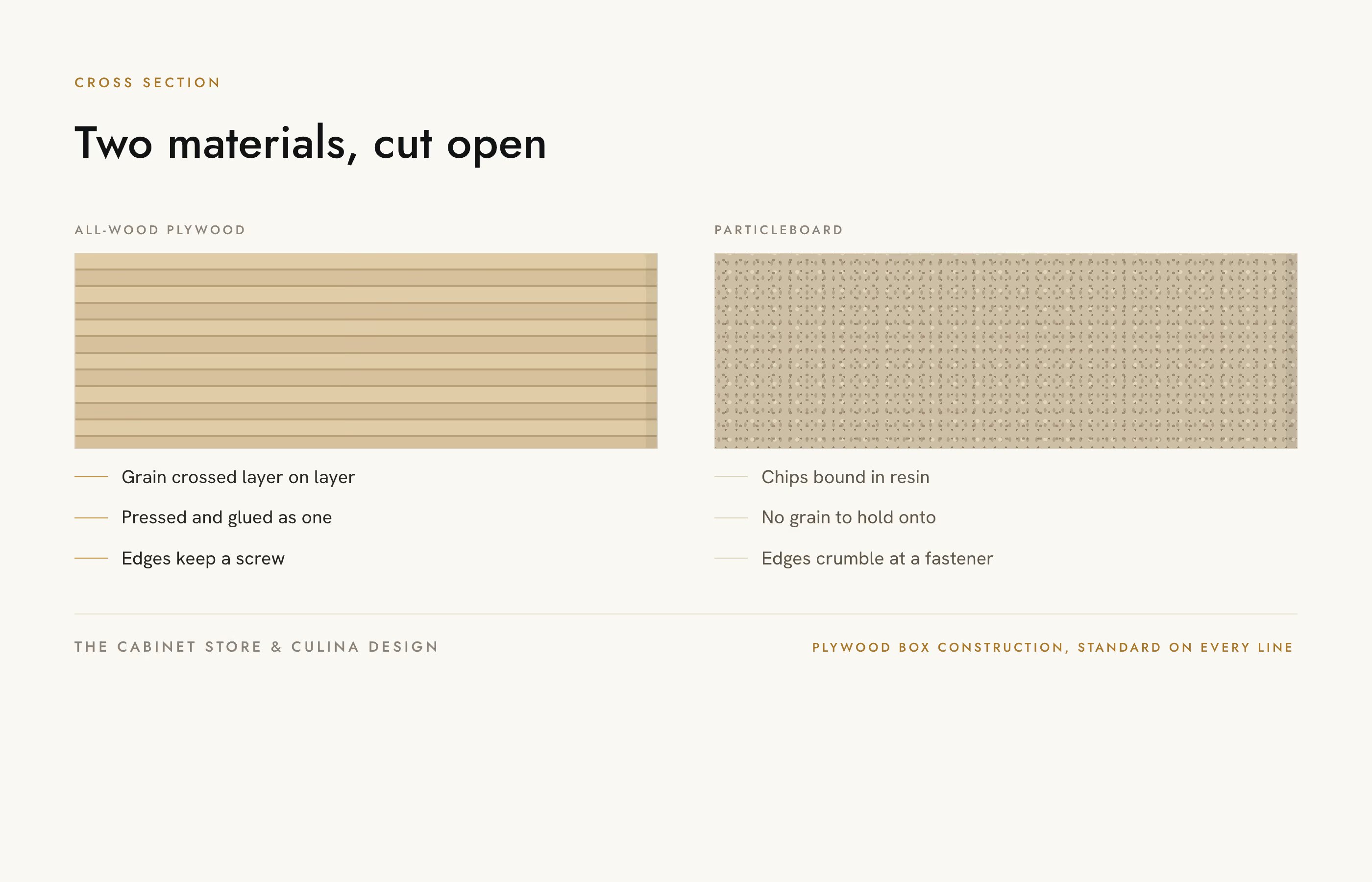
Plywood is built from thin sheets of wood veneer stacked with the grain rotated ninety degrees at each layer, then bonded. That cross-grain layering is what gives plywood its strength and its resistance to swelling. A plywood cabinet box handles the weight of stone countertops, holds cabinet screws tight, and keeps its shape through years of humidity swings. This is why our custom cabinets use plywood box construction as the standard.
For most kitchens, yes, plywood is better than particleboard where it counts. Plywood is lighter for its strength, grips fasteners better, and shrugs off the occasional leak or spill. Particleboard is heavier, holds screws poorly once stressed, and is vulnerable to water. That said, particleboard is not junk. It is flat, stable, takes a smooth finish, and is perfectly reasonable in a dry, low-moisture application. The question is not which is good and which is bad. The question is which one fits a room with plumbing, steam, and daily use for the next twenty years.
This is the biggest practical gap. When particleboard gets wet, it absorbs the water, swells, and does not return to its original shape. Natural Resources Canada notes that standard particleboard is prone to expansion and discoloration from moisture. A slow leak under a sink or a dishwasher line can quietly destroy a particleboard base cabinet from the inside. Plywood is far more forgiving. It can get wet, dry out, and stay structurally sound. In a kitchen or a bath, that difference matters.
Plywood wins on holding power. Its layered structure lets screws and cabinet hardware bite and stay tight, even after repeated opening and closing. Particleboard can crumble around a screw once it is stressed or stripped, which loosens hinges and shelf pins over time. Because plywood boxes stay square and rigid, they also carry the weight of quartz and granite tops without sagging. If you are pairing your cabinets with Cambria quartz countertops, a plywood box is the sensible base.
Particleboard is actually heavier than plywood because it is so dense, but weight is not the same as strength. Plywood carries more load with less mass and resists dents, racking, and sagging shelves better over years of use. For drawers and pull-outs that get opened thousands of times, the sturdier box pays off. Our pull-out shelves and sliding drawers and cabinet storage solutions last because the boxes behind them are built to last.
Yes. Particleboard makes sense when budget is the top priority, when the space stays dry, or when the cabinets are not expected to last decades. A laundry cubby, a garage cabinet, or a rental flip can be reasonable spots for it. Particleboard also takes paint and laminate cleanly and stays flat, so the finished look can be very good on day one. The trade-off is lifespan and moisture tolerance, not appearance. If you are refreshing a space on a tight budget, cabinet refacing or a Kitchen Fit refresh can also stretch your dollars without gutting the room.
Plywood boxes generally cost more than particleboard, though the gap varies by line, size, and finish. We do not publish a fixed percentage because real pricing depends on your layout, the cabinet line you choose, and your accessories. According to HomeAdvisor, kitchen remodels commonly land anywhere from about 14,600 to 41,600 dollars depending on scope, and box construction is one of the choices that moves that number. The better way to think about it is cost per year of use. A plywood kitchen that lasts twenty-five years can be cheaper over time than a particleboard kitchen you replace in ten.
Look and feel in a few spots. Open a door and check an unfinished edge or the inside of the box. Plywood shows thin horizontal layers along the edge. Particleboard shows a uniform, speckled, sandy texture. Plywood boxes feel lighter and more rigid, while particleboard feels dense and can flex. Tap the side panel. A hollow, papery sound often points to thin particleboard or laminate over a lighter core. When in doubt, ask the dealer to show you the box construction on the actual line you are considering. A straight answer is a good sign.
Quality cabinets are part of what buyers notice in a kitchen, and the kitchen is one of the rooms that most influences how a home shows. According to Credit Karma, a midrange minor kitchen remodel can return a large share of its cost at resale, and durable, well-built cabinetry is a big part of that impression. Boxes that still open smoothly and sit square years later read as a home that was cared for. To understand why the kitchen carries so much weight, see our guide on why the kitchen is the most important room in your home.
Good question, because the labels get muddy. Solid wood is used for doors and face frames but is rarely used for full cabinet boxes, since large solid panels expand and crack with humidity. MDF, or medium density fiberboard, is a smooth engineered panel that is excellent for painted doors because it will not show wood grain or joints, though it is heavy and, like particleboard, does not love standing water. Plywood is the preferred material for the box itself. So a well-built cabinet often mixes materials on purpose: a plywood box, an MDF painted door or a solid wood stained door, and solid wood face frames. When a cabinet is called all-wood, it usually means the box is plywood rather than particleboard.
With normal care, plywood-box cabinets can last several decades, often outliving the kitchen design around them. That is why people reface or repaint good boxes rather than replace them. Particleboard boxes can also last a long time in a dry, undisturbed spot, but they are far more likely to fail early from a leak, a sagging shelf, or stripped screws at the hinges. If your boxes are solid, a project like upgrading your existing cabinets or cabinet refacing can give you a new look without paying for new boxes.
We build with plywood box construction because we want your cabinets to outlast trends and survive real life in a working kitchen. We carry four premium cabinet lines, Showplace, Shiloh, Countryside, and Legend, and pair them with Blum soft-close hinges and drawer hardware. Our own crew installs every job, no subcontractors, and every cabinet is backed by a part-by-part lifetime warranty that we register and service ourselves. You get truly custom cabinets, built one kitchen at a time, without the custom-shop markup. See how it comes together in our project gallery or read through our process.
The best way to judge box construction is to open the doors and feel it yourself. You can do that at our Apple Valley showroom. We serve Apple Valley and the surrounding south metro, and you can find your area on our service areas page. Come visit our showroom to compare plywood construction, cabinet lines, and Cambria quartz side by side.
Yes, this article was written to earn your business, and we would be glad to earn it. If you want cabinets built on plywood boxes and installed by the people who build them, the first step is an in-store Design and Budget Consultation at our Apple Valley showroom. Book your consultation or plan a showroom visit and let us help you get it right the first time.
.avif)